
Best of BC Wineries Beacon
Arterra Wines’ Best of BC Wineries Beacon is a high-visibility retail display program used in liquor stores across British Columbia. Built around freestanding case-stack displays and end-cap executions, the program brings together multiple wine brands under a single Best of BC platform and is refreshed every three months.
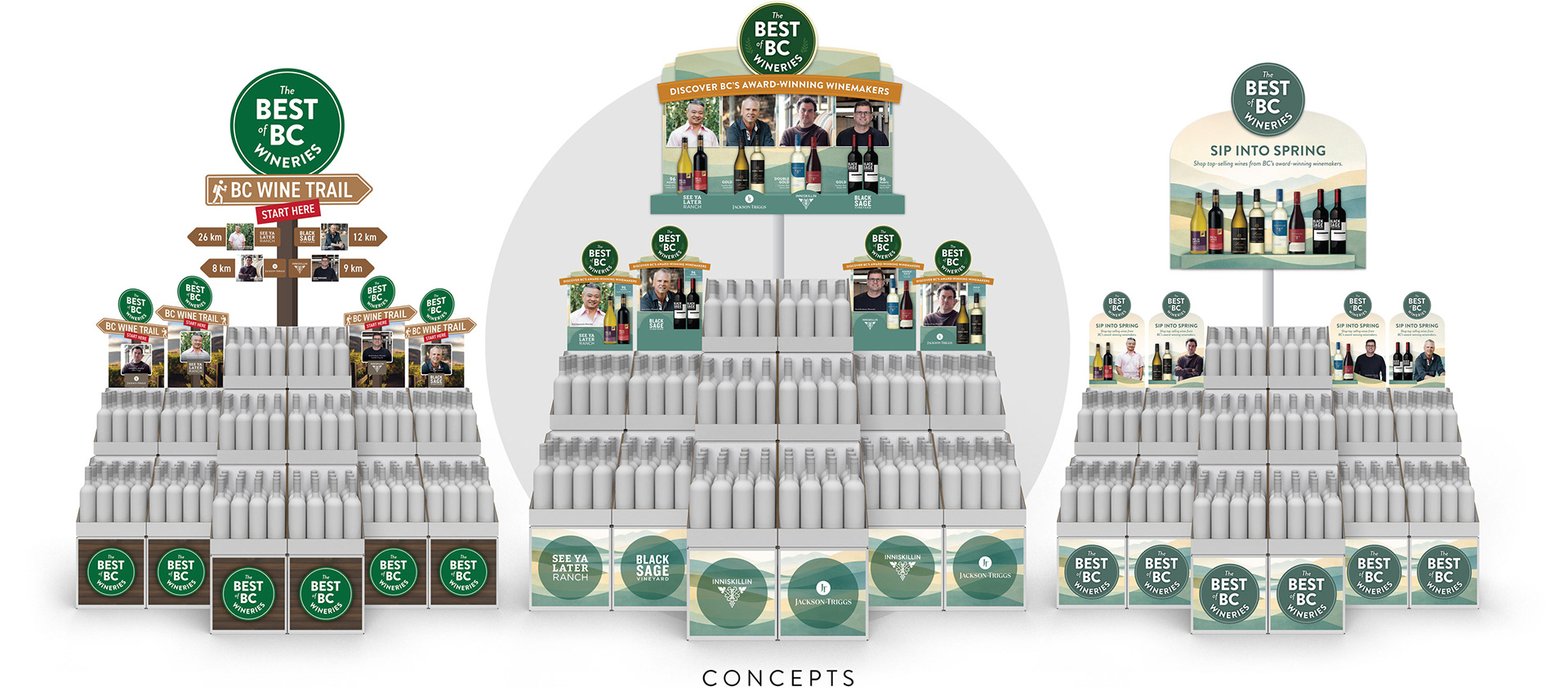
For the Spring 2026 refresh, I was asked to rethink the existing creative system while retaining the program’s established recognition. The resulting direction shifted the focus toward the people behind the wines, using winemakers as the visual anchor, and bringing more storytelling opportunities with awards or accolades while still giving the individual brands a strong retail presence.
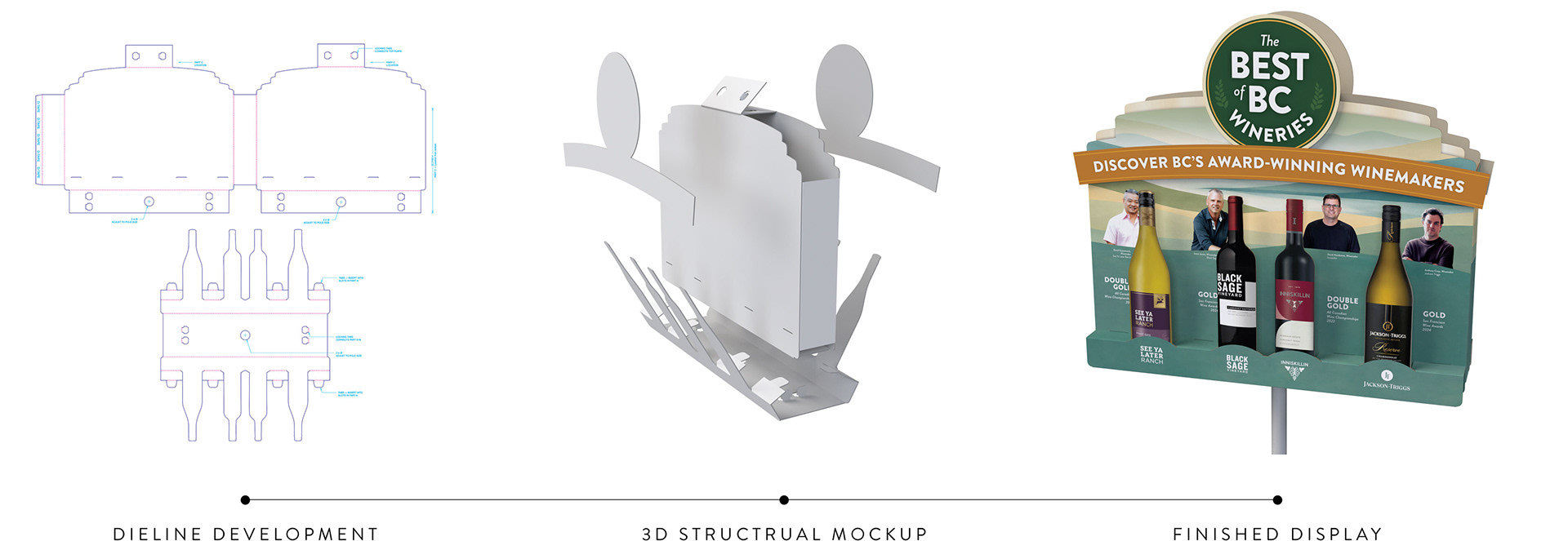
My work extended beyond design into the physical development of the display itself, including corrugated structural design, dieline development and 3D prototyping to test assembly, proportions and execution before production.
Built to work at retail scale
The display needed to communicate quickly in busy liquor retail environments, where it competes with product, packaging, signage and other promotional material. The selected direction uses a strong horizontal hierarchy, prominent Best of BC branding and large winemaker portraits to create recognition from a distance, while product, award and brand information becomes more detailed as the shopper approaches. That closely reflects the original objective of improving both visibility and shopability in high-traffic retail environments.
Featuring the people behind the wine
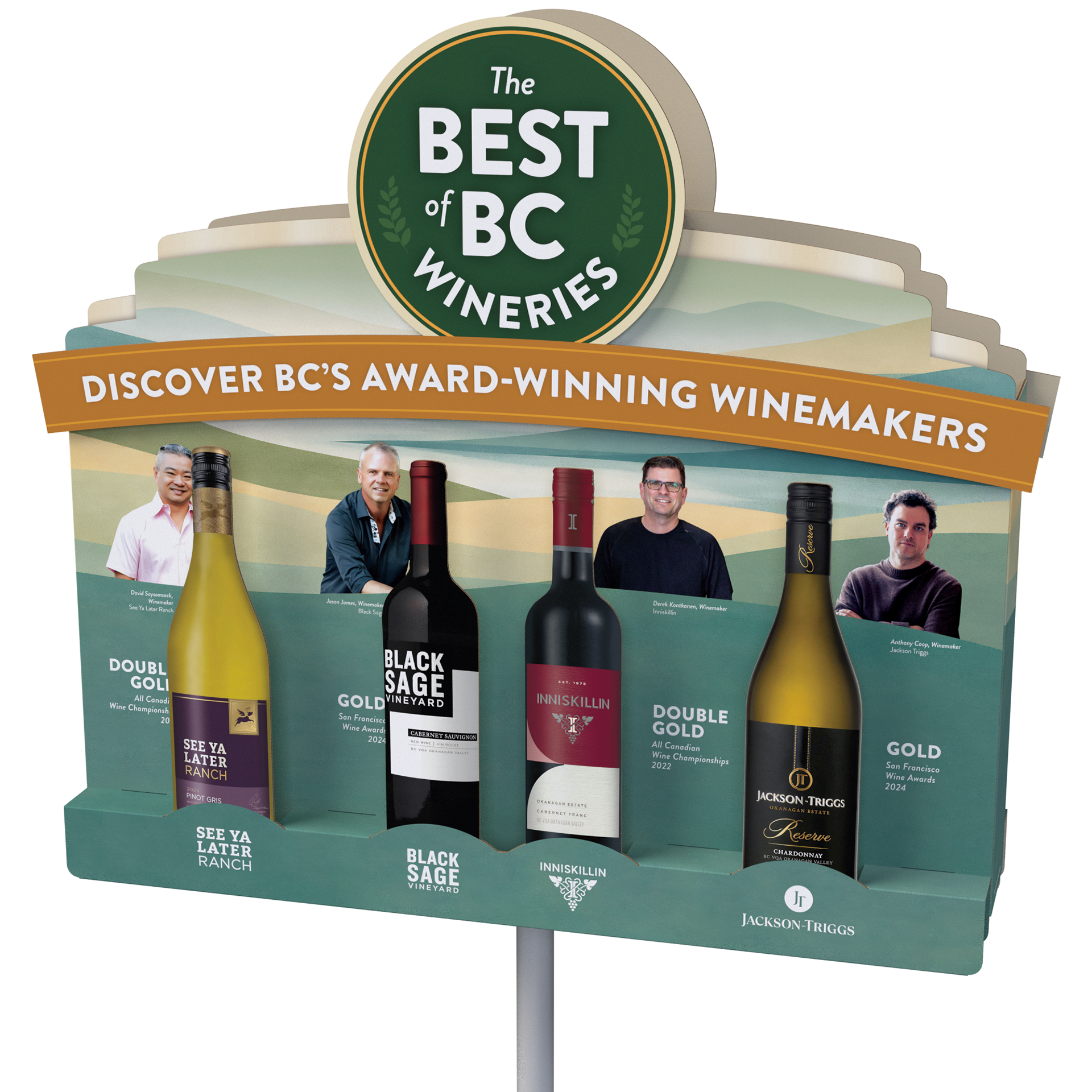
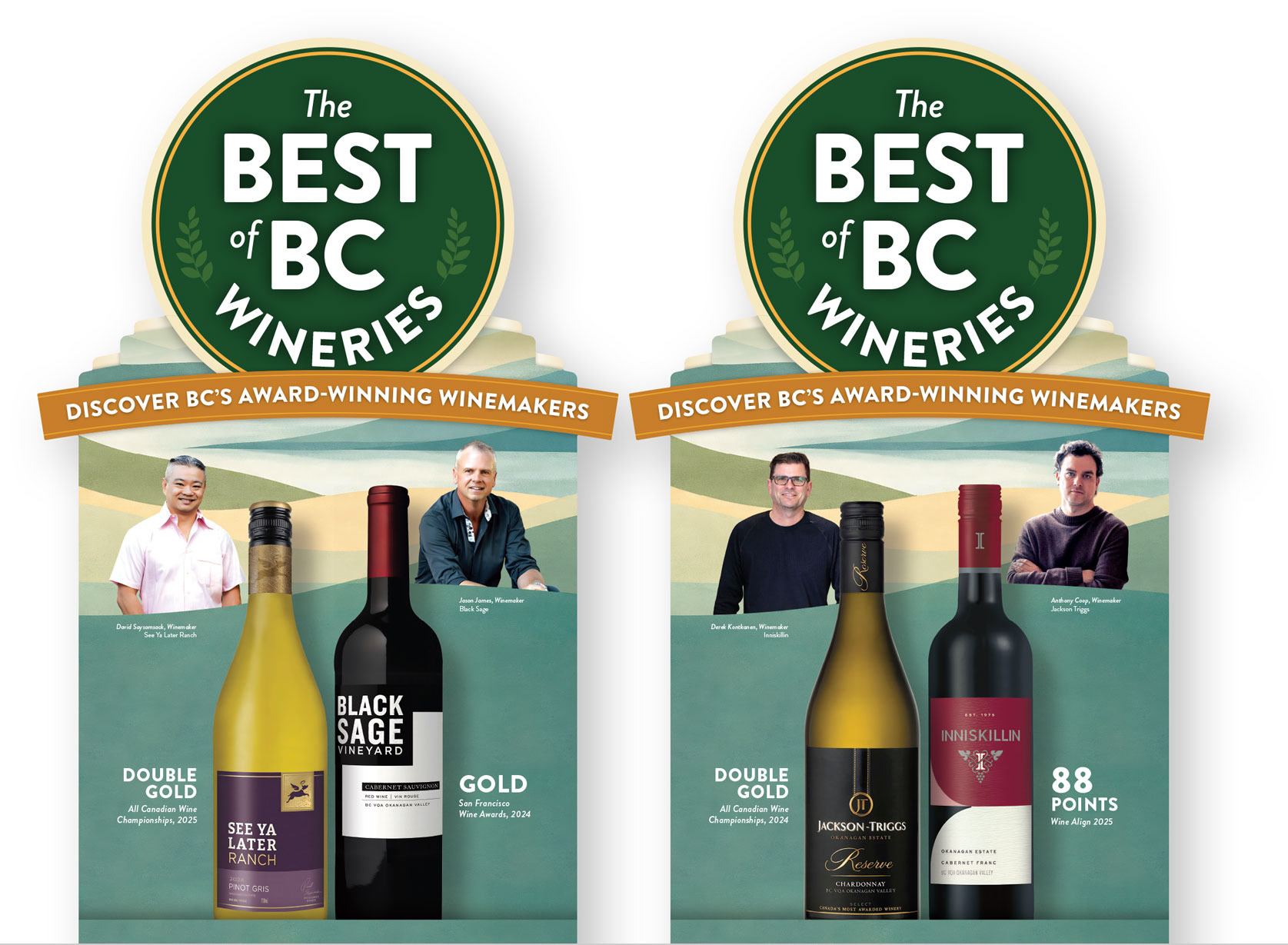
Rather than treating the winemakers as supporting content, the chosen concept makes them a central part of the visual system. The portrait-led design gives the program a more editorial, human character while still allowing several wines and brands to share the same display.
From Concept to Retail Execution
Testing the idea before it reaches production
3D modelling formed an important part of the development process, allowing the display to be assembled virtually before final artwork and production. The models helped validate scale, folding behaviour, dimensional relationships and sightlines, while also providing realistic visualizations that allowed the client to understand the finished execution before physical samples existed.